This newsletter will change how you think about protein, forever. Are you ready?
Dec 15, 2025
Please note:
This was originally sent to my newsletter.
Join here to get future posts directly in your inbox.
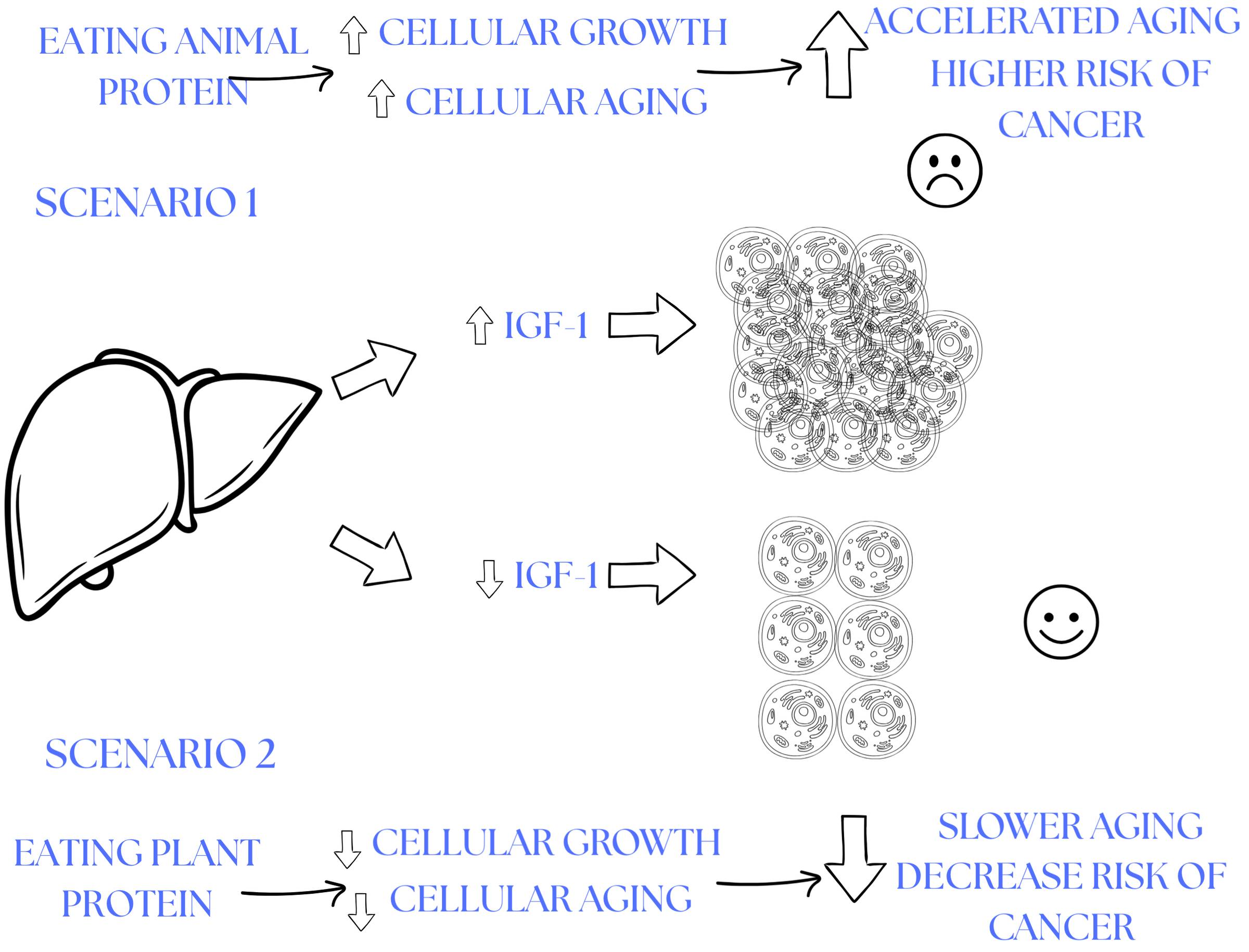
Hi Friends🙋♂️, Have you ever wondered why some people live past 100… while others don’t even reach 60?🧐 We often blame genetics.🤷♂️ But modern science tells a much more interesting story. In a previous newsletter, we talked about how much excess protein most people consume today and how awfully less fiber. This week, we’ll talk about what protein actually does in our body and how it influences aging and longevity. Let’s dive in!🔎 Have you ever wondered, what makes centenarians different?💯When researchers began studying centenarians (people living beyond 100 years), they asked a simple question: Is there a hormone or molecule in their blood that looks different from the rest of the population? The answer was yes. Both centenarians and their offspring consistently show lower levels of a growth-related hormone called IGF-1, compared to people who die earlier particularly from cancer. (This finding has been replicated across multiple populations.) (PMID: 19139887) What is IGF-1 and why should you care❓IGF-1 (Insulin-Like Growth Factor-1) is a key regulator of cell growth, cell division and tissue repair. It’s produced mainly by the liver in response to signals from the brain. There are phases of life when higher IGF-1 is normal and beneficial: childhood👶 adolescence👦 pregnancy🤰 ❗️But here’s the critical point: Chronically elevated IGF-1 in adulthood is associated with increased cancer risk, metastasis, and accelerated biological aging. Read that again. Growth helps us early in life. Later in life, too much growth becomes a problem. So what controls IGF-1 levels?One of the strongest regulators is diet, especially how much protein we eat🍽️, and what type of protein we eat🫘🥩. Let me explain this with a simple analogy. When was the last time when you played with LEGO?🧱Imagine building something with it. If the pieces closely resemble the final structure, assembly is fast. If they don’t, it takes more time and effort. Your liver works in a similar way. Animal proteins (like chicken🍗 or dairy🥛) are structurally very similar to human proteins → rapid processing→ strong growth signaling→ higher IGF-1→ increased cell division More cell division means: more DNA replication → more mutations → higher cancer risk This also accelerates cellular aging. Plant proteins🫘, by contrast, are structurally less similar → slower processing→ weaker growth signaling→ lower IGF-1→ slower aging at the cellular level This is one of the biological mechanisms explaining why populations eating predominantly plant-based diets tend to live longer.
Quantity matters tooConsuming too much protein regardless of source is not benign. High protein intake also activates mTOR, a key cellular growth pathway strongly linked to aging. (We are going to discuss mTOR as well later) (PMID: 31937935) The difference is that animal protein is easier to overconsume, and plant protein usually comes packaged with fiber, which naturally limits excess intake and supports the microbiome. Does this matter in our everyday life?Absolutely! ❗️Large population studies show that replacing as little as ~3-5% of animal protein with plant protein is associated with roughly a 15-25% reduction in all-cause mortality, driven mainly by lower cancer risk. ❗️Mindblowing! That can mean something as simple as changing one meal per week. For example, instead of chicken burrito you can eat a bean burrito for lunch or dinner tomorrow. This is only a small shift and still brings huge biological impact. But what about muscle and protein quality? You could ask.You’ve probably heard that whey protein is “superior.” In reality, some plant proteins, such as pea protein, have excellent absorption, provide sufficient amino acids for muscle maintenance, and come with added benefits like fiber. (PMID: 31690027) So basically you’re not compromising, you’re optimizing. If your only goal is maximum muscle gain as fast as possible, animal protein can work. But if your goal includes:
Then shifting toward plant-based protein sources is one of the most powerful dietary levers we have.💪 And yes, it is absolutely possible to meet all protein needs with plants. I’ll show you exactly how in the upcoming newsletters. That's all for today. Don’t forget: Make small dietary choices. Repeat over years. Shape how you age. Thank you for joining! See you next time. Cheers, |