Have you heard about "vitamin P"? Let me introduce you to phytates 🌱
Jan 11, 2026
Please note:
This was originally sent to my newsletter.
Join here to get future posts directly in your inbox.
Hi Friends, 🙋♂️
I hope you had a wonderful New Year’s Eve 🎉
Let’s start 2026 with a fascinating – and surprisingly powerful – nutrition topic.
Before we dive in, a quick update:
All my articles are now available on my website. 👨💻
Each newsletter is published there one month after it’s sent. Just visit the site, click on “fresh, crunchy,” and you’ll find the full archive.
Now, let’s get started.😁
More than just macronutrients
In previous newsletters, we explored how nutritious plant foods truly are. They don’t just provide macronutrients like carbohydrates, protein, and fats but also micronutrients such as fiber, vitamins, minerals, and a special group of compounds called phytonutrients.
One of these phytonutrients is… phytates.
Phytates❓
I’m glad you asked.
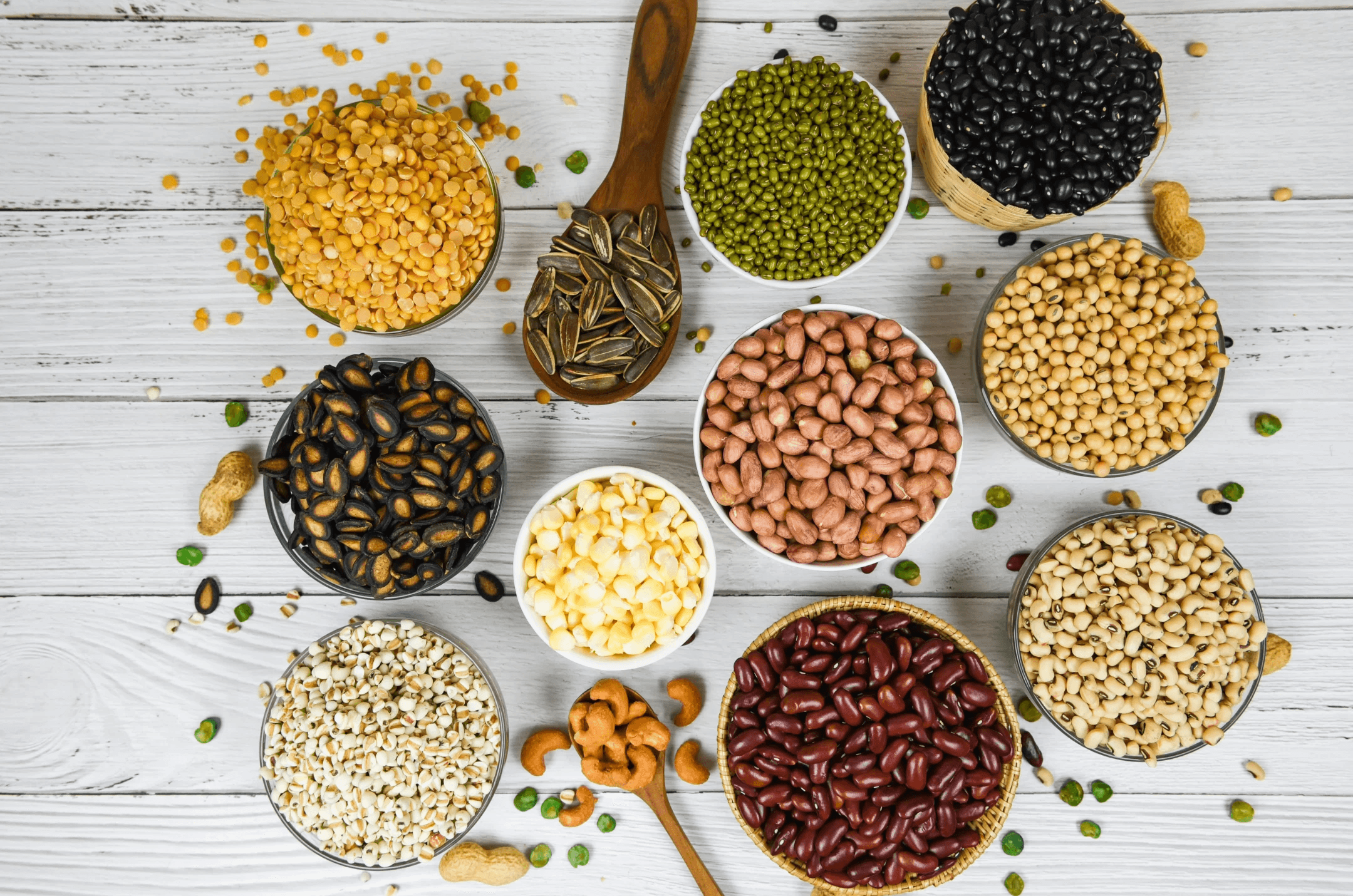
Phytates (also called phytic acid) are naturally occurring compounds found in whole grains, beans, nuts, and seeds.
(PMID: 19774556)
For a long time, scientists believed that fiber alone explained why plant-rich diets protect us from chronic disease. But real-world data raised an important question.
Researchers noticed that Denmark has higher rates of colorectal cancer than Finland, even though bothcountries consume high amounts of fiber and Denmark actually eats more fiber.
(PMID: 6296797)
So what was missing?
That’s where phytates enter the picture.
Phytates are true cellular fighters.
Research shows that when phytates are consumed in sufficient amounts, they are preferentially taken up by rapidly growing tumor cells, where they can interfere with cancer cell formation and growth.
Even more impressive: Phytates can act on multiple biochemical pathways.
They exhibit anti-inflammatory, antioxidant, and immune-supporting effects.
In laboratory studies, phytates have not only slowed cancer cell growth but have even been shown to push tumor cells back toward more normal behavior. This has been observed in leukemia, breast, prostate, and muscle cancer cell lines.
(PMID: 22415590)
And here’s the remarkable part:
Phytates affect tumor cells while leaving healthy cells unharmed.
They also appear to limit the ability of cancer cells to spread (metastasize) throughout the body.
(PMID: 15297368)
Do you see how immerse power our diet has? This is the real power of food: it can heal or harm.
Every meal nudges our health in one direction or the other.
More than we often realize, we have control over our long-term health. And with that control comes responsibility. Responsibility gives us opportunities.
Phytates don’t stop there.
They also help reduce the harmful effects of heme iron, the type of iron found in meat.
Heme iron is chemically unstable and can easily oxidize, forming free radicals that may damage DNA. This helps explain the consistent link between high meat consumption and colorectal cancer.
By binding excess iron, phytates may help lower this risk.
(PMID: 2990653)
Additionally, phytates have been shown to support bone health by helping regulate bone metabolism—suggesting a protective role against osteoporosis.
(PMID: 22614760)
Side effects?
If by side effects you mean additional benefits yes, plenty:
👉Lower risk of heart disease🫀
👉Reduced risk of type 2 diabetes🩸
👉Protection against kidney disease💧
(PMID: 17044765)
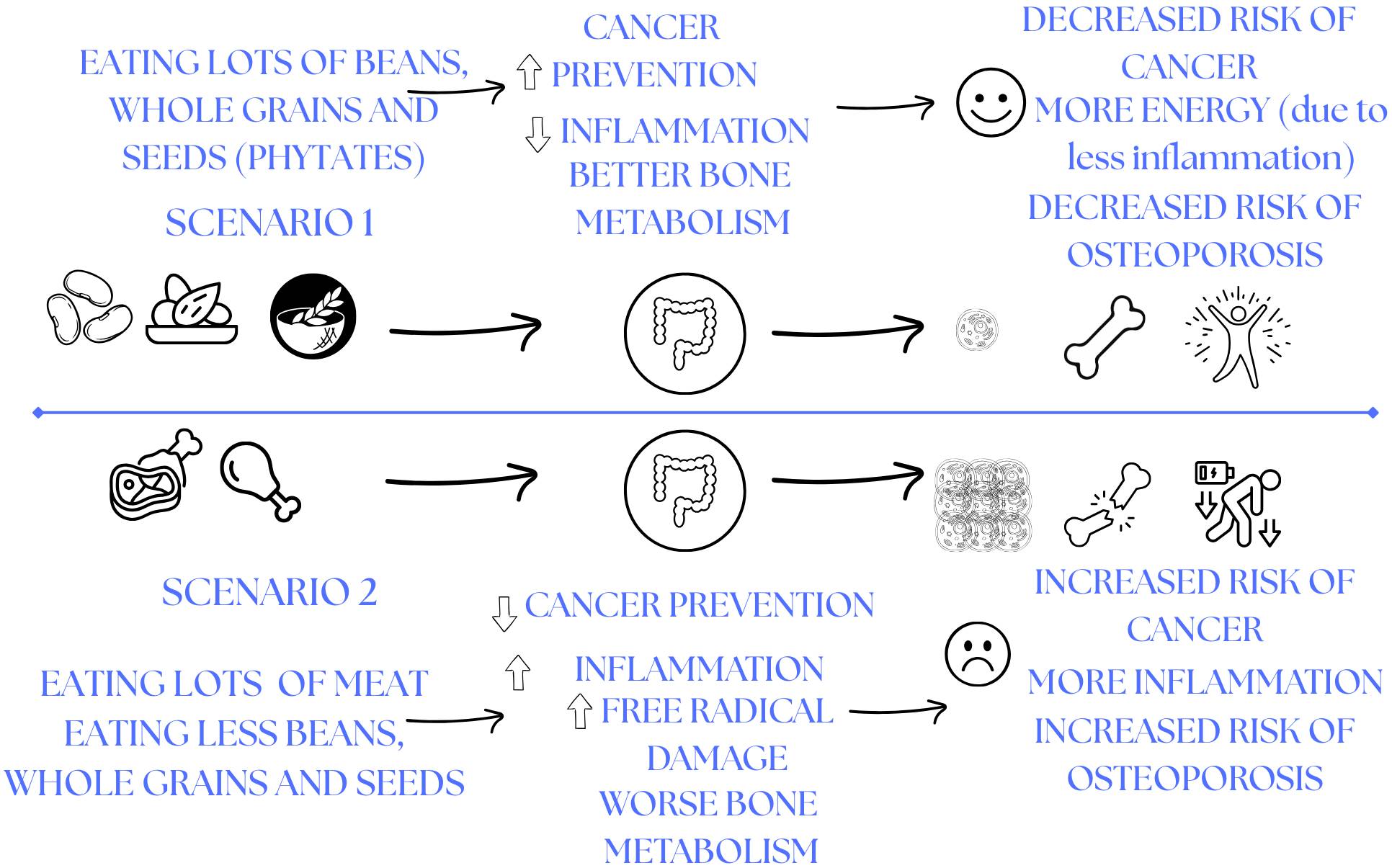 How different phytate levels affect our health and long-term longevity. |
How to get more phytates
Here are three simple, practical ways to increase phytates in your daily diet:
Swap white bread for whole-grain bread🌾
Eat half the meat on your plate and replace the rest with beans or lentils🫘
Snack on a handful of nuts or seeds instead of chips or a croissant 🌰
Because of their powerful role in disease prevention and long-term health, some researchers have even suggested phytates deserve a new name: “Vitamin P.”
So make sure you get your dose next time you eat 🌱
That’s all for today. Thank you for being here.🙏
If you found this helpful, please share it with one friend who might benefit. Knowledge grows best when it’s shared.
See you in the next one,
Warmly,
Bazil